


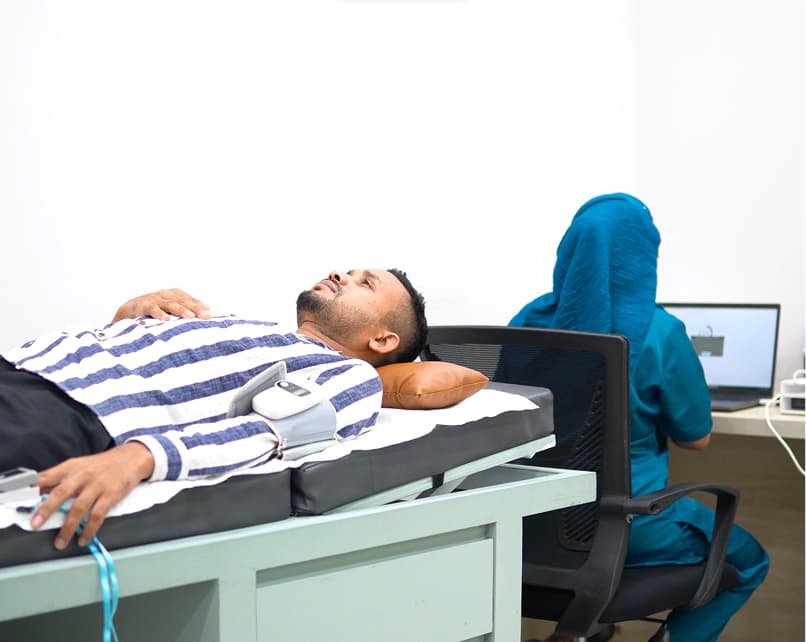
If your feet feel like they’re burning once you lie down at night, even though nothing looks different on the skin, it’s a specific and fairly common symptom. It usually points toward something worth checking rather than something to wait out.
Why Burning Feet Often Feel Worse at Night
Several patients describe the same pattern: minimal symptoms during the day, then a burning or tingling sensation that intensifies after lying down. This is a commonly reported pattern with nerve-related symptoms. During the day, movement and distraction can mask milder sensations, while at night, with less external stimulation, nerve signals become more noticeable.
What Burning Feet at Night Can Indicate
Burning feet, especially when it’s a recurring nighttime pattern, is one of the more frequently reported symptoms of peripheral neuropathy, nerve damage affecting sensation in the feet and legs. When neuropathy is related to diabetes, it’s referred to as diabetic neuropathy.
The sensation itself happens because damaged nerve fibers send incorrect signals, read by the body as burning, tingling, or a “pins and needles” feeling, rather than accurately reporting temperature or pressure.
Other Symptoms That Often Come Alongside It
Burning feet rarely shows up completely alone. It’s often accompanied by:
- Numbness or reduced sensation in the same area
- Tingling or a “pins and needles” feeling
- Increased sensitivity to light touch, like bedsheets
- A sense of imbalance or altered foot sensation when walking
If you’re noticing burning feet alongside any of these, that combination is worth mentioning specifically during an evaluation.
When to Get It Checked
Occasional, mild warmth after a long day is different from a recurring burning sensation that disrupts sleep or has been present for weeks. Get it evaluated if:
- It’s a repeated pattern, not a one-off
- It’s affecting your sleep
- You have diabetes, particularly if it’s been present for several years
- It’s accompanied by numbness or a change in balance
What Can Be Done
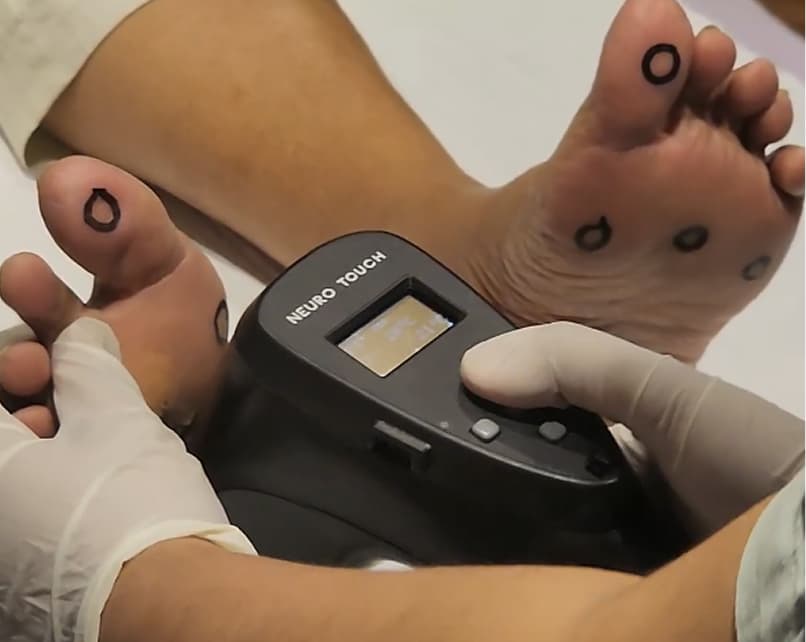
The first step is identifying whether nerve involvement is behind the symptom, and if so, what’s driving it. A structured evaluation typically includes nerve function testing, a circulation check, and risk profiling based on history, particularly diabetes status. From there, a management plan focuses on early detection, supportive therapies, and monitoring, with the goal of managing the symptom and protecting against downstream complications like unnoticed foot injuries.
A Few Things to Avoid in the Meantime
- Don’t apply heat directly to the skin to try to counteract the burning sensation. Reduced sensation can mean you don’t notice a burn forming.
- Don’t dismiss it as “just circulation” or fatigue without an actual evaluation, especially if it’s recurring.
- Do inspect your feet regularly for any cuts, blisters, or changes you might not otherwise feel.
Frequently Asked Questions
Is burning feet at night always related to nerve damage?
It’s one of the more common explanations, but not the only possible one. A proper evaluation is the only way to confirm the cause.
Does treating the burning sensation also address the underlying cause?
Managing the symptom and addressing the underlying cause are related but distinct. A structured plan typically does both.
Next Step
If burning feet at night has been a recurring pattern for you, a structured screening can help identify what’s behind it. Book a screening or read the full guide to peripheral neuropathy. MedlinePlus also has a general overview of peripheral nerve disorders.