


If you’ve come across both terms, “diabetic neuropathy” and “peripheral neuropathy,” and aren’t sure whether they mean the same thing, you’re not alone. The two are closely related, but they’re not identical, and the distinction matters for understanding what’s actually happening and how it should be managed.
The Short Answer
Peripheral neuropathy is the broader term. It refers to damage to the peripheral nerves from any cause. Diabetic neuropathy is a specific type of peripheral neuropathy: nerve damage caused by diabetes. In other words, all diabetic neuropathy is peripheral neuropathy, but not all peripheral neuropathy is caused by diabetes.
What Peripheral Neuropathy Covers
Peripheral neuropathy can result from a range of causes beyond diabetes, including poor circulation, nerve compression or injury, certain nutritional deficiencies, some medications, and other underlying health conditions. Symptoms such as numbness, tingling, burning feet, or muscle weakness can look similar regardless of the underlying cause, which is part of why identifying the actual cause matters so much.
What Makes Diabetic Neuropathy Specific
Diabetic neuropathy develops when sustained high blood sugar levels damage small nerve fibers over time. It’s the most common cause of peripheral neuropathy, and it typically follows a recognizable pattern, starting in the feet and progressing upward, since the longest nerves are affected first.
When diabetic neuropathy specifically affects the feet and legs in this pattern, it’s sometimes referred to more precisely as diabetic peripheral neuropathy.
Why the Distinction Matters
Knowing whether neuropathy is diabetes-related, or has another cause, shapes how it should be managed:
- Diabetes-related neuropathy is closely tied to blood sugar management, and is frequently assessed alongside diabetic foot risk, since the two commonly develop together.
- Neuropathy from other causes may point toward a different underlying issue that needs its own evaluation, separate from diabetes management.
This is why a structured assessment looks at overall risk profiling and history, not just the symptoms in isolation. The cause changes the plan.
Shared Symptoms, Different Starting Points
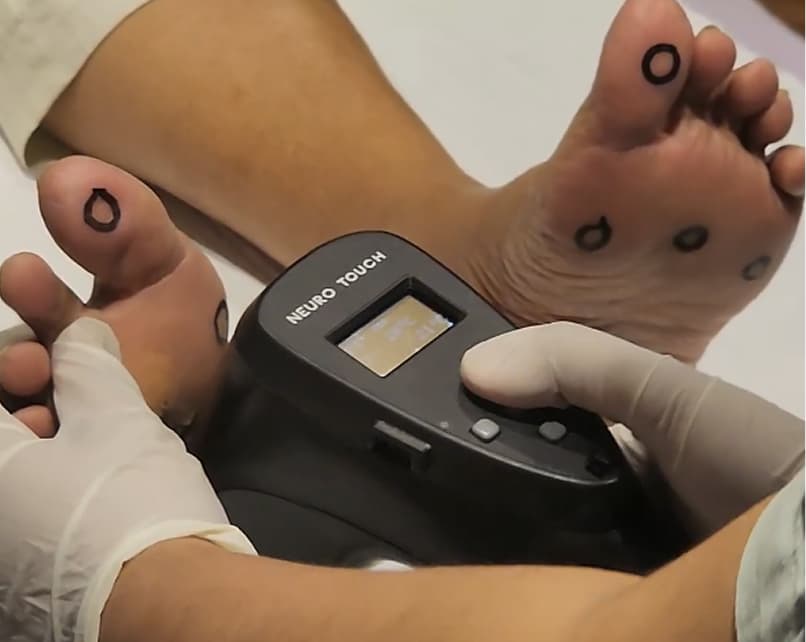
Both forms can present with numbness in the feet, tingling, burning sensations (often worse at night), and increased sensitivity to touch. Because the symptoms overlap so heavily, self-diagnosing which type you’re dealing with isn’t reliable. A structured evaluation that reviews diabetes history alongside nerve function testing is what actually differentiates the two.
When to Seek Evaluation
Consider getting evaluated if you’re noticing new or ongoing numbness, tingling, or burning in your feet, whether or not you have a diabetes diagnosis. If diabetes is present, it’s worth mentioning explicitly, since it directly informs how the evaluation is approached.
What Can Be Done
Management for both forms follows a similar structured approach: identifying the cause, early detection before symptoms progress further, supportive therapies suited to what’s found, and ongoing monitoring. For diabetes-related neuropathy specifically, blood sugar management is typically part of the broader plan alongside nerve-focused care.
Frequently Asked Questions
Can you have peripheral neuropathy without diabetes?
Yes. Diabetes is the most common cause, but not the only one.
Does diabetic neuropathy always affect the feet first?
It commonly does, since the longest nerves, running to the feet, are typically affected earliest, but presentation can vary.
Is treatment different for diabetic neuropathy versus other peripheral neuropathy?
[Reviewer: confirm how much overlap vs. divergence there actually is in Ekagra’s approach. Keep general until confirmed.]
Next Step
If you’re dealing with numbness, tingling, or burning feet and aren’t sure what’s causing it, a structured screening can identify whether diabetes is a factor. Book a screening, read the full Peripheral Neuropathy guide, or see how Ekagra approaches neuropathy care. MedlinePlus also has a general overview of peripheral nerve disorders.